
"large scale"
6000 article(s) found

Introduction of Columbia Coffee Arabica Coffee Flavor description method Grinding scale Manor area
Colombian Coffee Arabica Coffee Flavor description method Grinding scale Manor area introduction the varieties of Colombian coffee are mainly small-grain coffee. Plants are small trees or large shrubs, 5-8 m tall, usually much branched at base; old branches gray-white, nodes dilated, young branches glabrous, compressed. Leaves thinly leathery, ovate-lanceolate or lanceolate, 6-14 cm long, 3.5-5 cm wide, tip

Introduction to the characteristics of Tanzania Kilimanjaro Coffee Flavor Manor treated with Water washing
Rice: mainly grown by small farmers, there are also several large-scale rice farms of the National Agriculture and Food Corporation (NAFCO). Large-scale cultivation depends mostly on modern irrigation facilities, while small-scale cultivation depends entirely on natural rainfall or traditional irrigation. The national annual output of rice is 60-700000 tons. The main planting areas are Shinyanga, Mwanza, Morogoro, Mbeya and Tabora.

Flavor description of Honduran coffee beans introduction to the method of variety treatment in grinding scale production area
The flavor description of Honduran coffee beans the variety treatment method of grinding scale production area introduces that the particles of Honduran coffee beans are large in shape, uniform in size, uniform in color and glossy in color. In order to facilitate harvesting, farmers will prune the coffee trees to no more than 150 centimeters, because if they grow too high, they must set up ladders to pick, which is not only time-consuming, but also may damage the trees by bending branches.

Introduction to El Salvador Pacamara Coffee Bean Grinding scale method
El Salvador Pacamara coffee beans grinding scale method taste manor El Salvador boutique coffee is concentrated in Santa Ana in the west and Charantanan fruit volcanic rock producing areas in the northwest. In recent years, the top 10 cup tests are almost all from these two producing areas, with an altitude of about 9-1500 meters, mainly bourbon (68%), followed by Pacas (29%), mixed-race Paka.

Introduction of Flavor description and Grinding scale Variety production area of Yunnan small-grain Coffee Huaguoshan
Pu'er: tea village Pu'er has cultivated coffee for 150 years. At the end of 1990s, Pu'er City began to cultivate coffee as a dominant backbone industry to adjust the industrial structure and increase farmers' income. Coffee is grown in 54 townships (towns) in 9 counties and 1 district of Pu'er City. Yunnan coffee was planted on a large scale in the mid-1950s, with a planting scale of 4000 hectares at one time. By the end of 1997, the whole province

Introduction to the grinding scale of the grade flavor description method of Colombia emerald coffee bean manor
Colombian Emerald Coffee Bean Manor Grade Flavor description treatment characteristics Grinding scale introduction the varieties of Colombian coffee are mainly small-grain coffee. Plants are small trees or large shrubs, 5-8 m tall, usually much branched at base; old branches gray-white, nodes dilated, young branches glabrous, compressed. Leaves thinly leathery, ovate-lanceolate or lanceolate, 6-14 cm long, 3.5-5 cm wide, tip long

Description of Flavor of Yunnan Coffee Bean by Grinding scale method
Yunnan small-grain coffee is of good quality. Take Lujiangba small-grain coffee as an example: the percentage contents of the main components are as follows: crude fat 17.1, reducing sugar 0.93,starch 3.07,nitrogen 2.27,crude protein 1.419, ash 3.70,19.33crude fiber, 2.14caffeine, 9.20.Water 6.87small-grain coffee is suitable for growing in the mountain area with an altitude of 800m to 1800m.
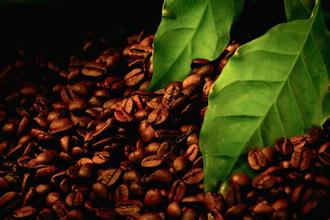
Flavor description of Colombian Ramon Coffee beans introduction to the taste of grinding scale varieties
Description of the flavor of Colombian Ramon coffee beans the taste of Colombian coffee is mainly small-grain coffee. Plants are small trees or large shrubs, 5-8 m tall, usually much branched at base; old branches gray-white, nodes dilated, young branches glabrous, compressed. Leaves thinly leathery, ovate-lanceolate or lanceolate, 6-14 cm long, 3.5-5 cm wide, tip long acuminate

Sidamo Coffee Flavor description Taste characteristics treatment method Grinding scale
Sidamo coffee flavor description, taste characteristics, processing method, grinding scale, Sidamo introduction: it is a very large producing area in Ethiopia, and even the well-known Yegashev producing area is in Sidamo. Sidamo can also be said to be the birthplace of sun bean treatment, and most of the good sun drying comes from Sidamo, among which the most famous sun beans are Sidamo red cherry.

Uganda Coffee Bean Flavor Description Grind Scale Treatment Taste Region Variety Introduction
Uganda coffee beans flavor description grinding scale processing method taste production area variety introduction Uganda coffee cultivation is all family small scale operation The livelihoods of 25 per cent of the population are linked to coffee production. There are about 500000 farms growing coffee, but mainly producing roberts. Robusta accounts for 90% of coffee production, with the rest becoming Arabica coffee. ah

Description of taste and flavor of Ugandan coffee beans by grinding scale treatment
Description of the taste and flavor of Ugandan coffee beans Africa is the hometown of the two major varieties of coffee, Arabica and Robusta, while Uganda, which is located in eastern Africa, which enjoys the reputation of plateau water and the Pearl of East Africa, is believed by many people as the birthplace of Robusta. Uganda is one of the few countries in the world that can grow Arabica and Robusta at the same time.

Introduction to the taste characteristics of El Salvador Pacamara coffee flavor description grinding scale varieties
El Salvador Pacamara Coffee Flavor description Grinding scale varieties taste characteristics El Salvador is a producer of high quality commercial Arabica beans and is famous for its strict and effective quality control. Since 2003, he has joined the COE competition. With excellent ancient coffee, it successfully entered the boutique coffee market.

Introduction to the production area of grinding scale of taste and flavor varieties of coffee bean hand chong manor in Honduras
Honduras Coffee Bean hand Chong Manor taste Variety Grinding scale production area introduction the granules of coffee beans in Honduras are large in shape, uniform in size, uniform in color and glossy. In order to facilitate harvesting, farmers will prune the coffee trees to no more than 150 centimeters, because if they grow too high, they must set up ladders to pick, which is not only time-consuming, but also may damage the trees by bending branches.

Do you work at Starbucks in Korea? Starbucks employees in South Korea have launched a large-scale protest against the overwork plan.
According to media reports such as TVBS News, Yahoo yahooy and Economic Daily, Starbucks employees in South Korea said they were overworked due to excessive workload and planned to protest on Wednesday. Why did Starbucks employees in this place suddenly launch this protest? According to relevant reports, the protest was triggered by the launch of Starbucks in South Korea at the end of last month.
Introduction to the characteristics of grinding scale manor taste treatment of Pacamara coffee beans in El Salvador
El Salvador Pacamara coffee beans grinding scale manor taste treatment characteristics of bourbon is already the largest variety in the country, the national planting rate is as high as 60%, the fruit of Saguo Bourbon has four colors of red and yellow orange with a small amount of pink bourbon. Pacamara, which belongs to large granule, is a new variety cultivated by Pacas and elephant bean. Pacamara originated from sa, but its output is much higher than that of sa.

Characteristics of Honduran Coffee Flavor description of production area by Grinding scale
The characteristics of Honduran coffee taste grinding scale regional flavor description treatment Honduran coffee bean particles are large in shape, uniform in size, uniform in color and glossy. In order to facilitate harvesting, farmers will prune the coffee trees to no more than 150 centimeters, because if they grow too high, they have to set up ladders to pick, which is not only time-consuming, but also may damage the trees by bending branches.

Description of Flavor of Camellia Lady Manor Coffee beans in Honor Manor in El Salvador introduction of Grinding scale varieties
El Salvador Glory Manor Camellia Lady Manor Coffee beans Flavor description Grinding scale Variety introduction in 1984, Eduardo Francisco bought Pacamaral Coffee Garden and became the new owner. He is determined to create a special feature. His family has been engaged in coffee in the beautiful Apanecas mountains since his grandfather's time. It has been more than a hundred years. Pacamara is a new species developed by Sarkozy and developed by Paca.

Taste treatment of El Salvador Himalayan boutique coffee beans Flavor description of grinding scale
Coffee fields are endless, and most of them are harvested by machinery, which is in line with economic benefits. When 75% of the coffee fruit in the coffee garden turns red, mechanical harvesting is started, followed by the same pre-washing operation, which is moved into the sink to remove floating beans, sift out the sunken beans, and then use a large pulp screening machine to dig out the pulp and remove the pods covered with pectin. The next stage is separated from the washing method: sticky beans.
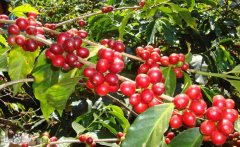
China Yunnan coffee domestic coffee Yunnan coffee flavor China Coffee Network
Yunnan coffee was planted on a large scale in the mid-1950s, with a planting scale of 4000 hectares at one time. By the end of 1997, the planting area of coffee in the province had reached 7800 hectares. At present, the planting area of the province accounts for 70% of the national area, and the output accounts for 83% of the whole country. Yunnan coffee has established the dominant position in China in terms of planting area and coffee bean production.

Yunnan Coffee Flavor
Yunnan coffee was planted on a large scale in the mid-1950s, with a planting scale of 4000 hectares at one time. By the end of 1997, the planting area of coffee in the province had reached 7800 hectares. At present, the planting area of the province accounts for 70% of the national area, and the output accounts for 83% of the whole country. Yunnan coffee has established the dominant position in China in terms of planting area and coffee bean production. Yunnan small grains of coffee, Qian